How to Stretch Your Perineum
Your perineum is the space between the vulvar opening and the anus. In this space there are muscles, connective tissue, and skin that oftentimes can become restricted or “tight”. In this article, you will learn who will benefit from this technique, how to perform, and several modifications to tailor it best to your needs.
Who is this technique best suited for?
1. Pain at the vulvar opening. Individuals who have pain during vaginal penetrative intercourse, tampon usage, and/or speculum exams.
2. During pregnancy. Indicated to prepare perineum for vaginal delivery beginning as early as 34 weeks. Do not perform during the first trimester. Ask your doctor if this is an appropriate technique for you.
3. Post-Partum. Once cleared by your doctor (typically at 6 week check up), this technique can be used to reduce vulvar scar tissue and reduce pain with vaginal penetration.
Supplies you’ll need
1. Personal Lubrication - check with your provider for a recommendation that's right for you
a. https://www.ahyes.org/products/ah-yes-wb-water-based-natural-lubricant
b. https://getmaude.com/collections/lubricant
c. https://goodcleanlove.com/collections/all
2. Pillows.
3. Thoroughly clean hands (esp under the fingernails!) and/or gloves.
4. Towel to be placed under bottom.
How to perform the stretching
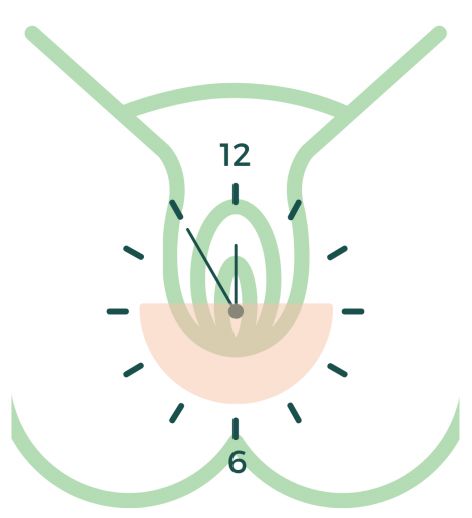
Visualize a clock face on the outside of the vulvar opening. Up towards your pubic bone is 12 o'clock and down towards your tailbone is 6 o'clock. WARNING: Do not press up from 10-2 at this depth as your urethra is located here
Exercise 1: Stretching
- Insert your thumb/finger at/past the first knuckle deep with the pad face down towards your tailbone.
- Apply pressure down towards 6 - hold for 5-10 breaths.
- Repeat at each "hour" along the bottom of the clock from 3 to 9.
- Repeat 2-3 repetitions.
Exercise 2: Sweeping
- Insert your thumb/finger at/past the first knuckle deep with the pad face down towards your tailbone.
- Apply pressure down towards 6.
- Maintain this downward pressure as you slide your digit back and forth between 3<>9 o'clock.
- Perform 5-10 slow sweeps.
Body Positioning
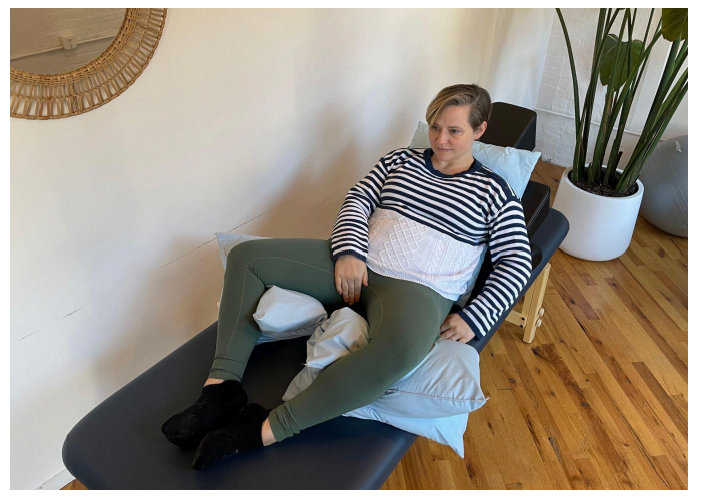
There are several positions in which to perform this stretching technique. The most important factor to consider when choosing the right position for you is to be COMFORTABLE. Relaxation is key to get the most benefit.
Option 1: Lying on your back (self).
Prop up your upper body using lots of pillows behind your back and head. You should be able to reach your pelvic area comfortably! Bend your knees, place feet together, then let your knees fall out to the side. Place pillows under your legs for support. Use your thumb.
Option 2: Lying on your back (partner).
It is possible to have a partner perform the stretch on you if it's difficult for you to reach the area yourself. Have your partner sit to your side and use the index finger.
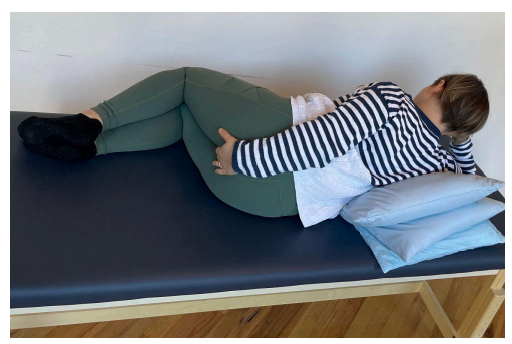
Option 3: Lying on your side.
Use this position if lying on your back is not comfortable or if you find it difficult to reach your pelvic area. Lie on your side with your hips and knees bent. Prop your upper body up using pillows or on your bottom arm so that you can reach your pelvic area from behind. Use your index or middle finger
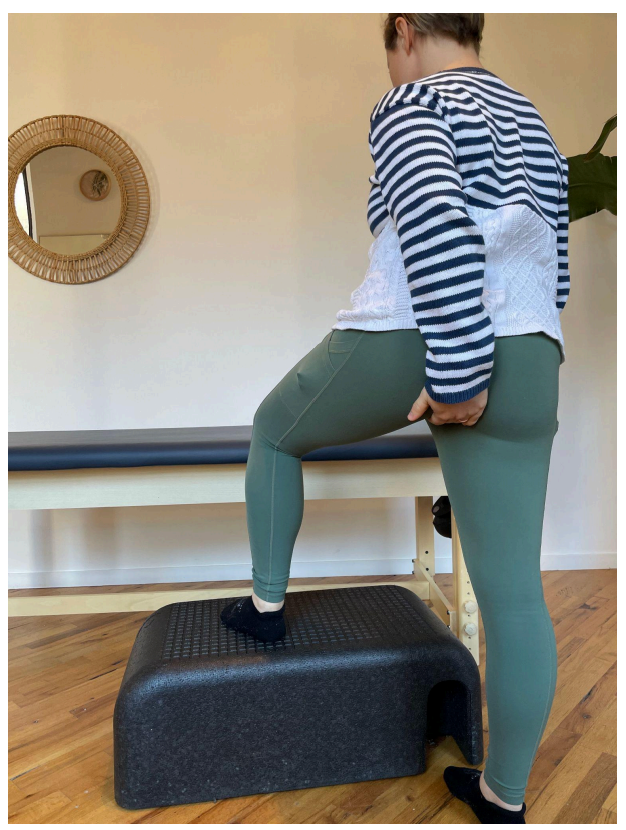
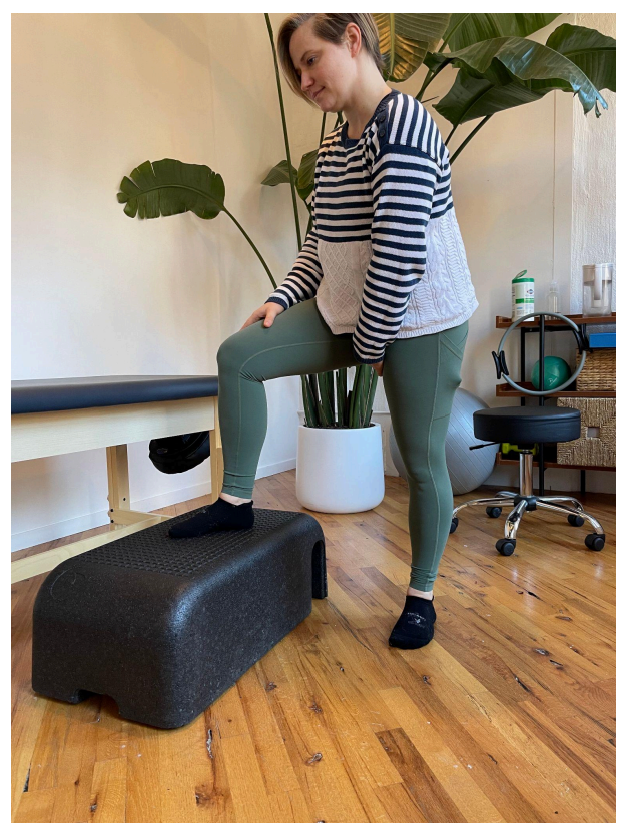
Option 4: Standing in the shower
This position is best suited for those who have good balance and need the convenience of doing this in the shower. Stand with one leg propped up on the edge of the bathtub or on a stool. If using your thumb, reach in front. If using your middle or index finger, reach behind